


Regeneration in Action: A Visit to the farm Wilmars Gärten
Jan 16, 2026
Just an hour’s train ride from Berlin, in the quiet countryside near Märkisch Wilmersdorf, lies Wilmars Gärten - a 360-hectare farm that feels like a vision made real. On a warm afternoon, Sahil, a 20-year-old passionate change-maker cycling 20,000 kilometres across 20 countries to raise awareness for soil health, arrives to visit. His global campaign meets its local counterpart here, where agriculture, art and advocacy for the earth blend into one.
Mariá Gimenez, the founder of Wilmars Gärten, greets us with a wave from behind a wooden hut. She’s stirring a pot of tomato sauce over an open fire, the air thick with the scent of woodsmoke and summer. “We harvested around seven hundred kilos of tomatoes yesterday,” she says, smiling. “This is a way to preserve the energy of the sun.” She explains how the hot sauce is poured into jars and sealed tight - an old, simple technique that keeps the taste of summer alive through the cold months.
Before she became a farmer, Mariá was an artist, painting in Berlin and New York. “I still am an artist,” she says. “You don’t stop being one just because you start farming. But I wanted to do more than sell paintings.” With six children and a deep concern for future generations, she began asking herself what role she could play in sustaining the world. “I realized I didn’t have to protest on the streets to make a change. I could grow gardens - remind people that we humans are capable of care and beauty.”
A walk through the farm shows what she means. In the first orchard, rows of apple, quince, pear, plum and nut trees are planted in curved lines across a gentle slope. The pattern follows the principles of keyline design, which helps water soak evenly into the ground. “When we started, the soil was compacted and lifeless,” Mariá says, kneeling to pick up a handful of earth. “Now it smells rich and full of life. We even find worms again - there were none before.”
The orchard is part of a silvopastoral system: fruit and nut trees are interplanted with shrubs and wildflowers, and chickens roam freely, feeding on insects and fertilising the soil. “The ground is never ploughed,” she explains. “It’s always covered, either by plants, mulch, or living roots. It’s simple, but it works.” These practices - no tillage, permanent ground cover, and integrating trees with grazing animals - are core principles of regenerative agriculture. Her approach combines science and intuition - much like her art. “Agriculture is a dialogue with nature,” she says. “We act, and nature responds.”
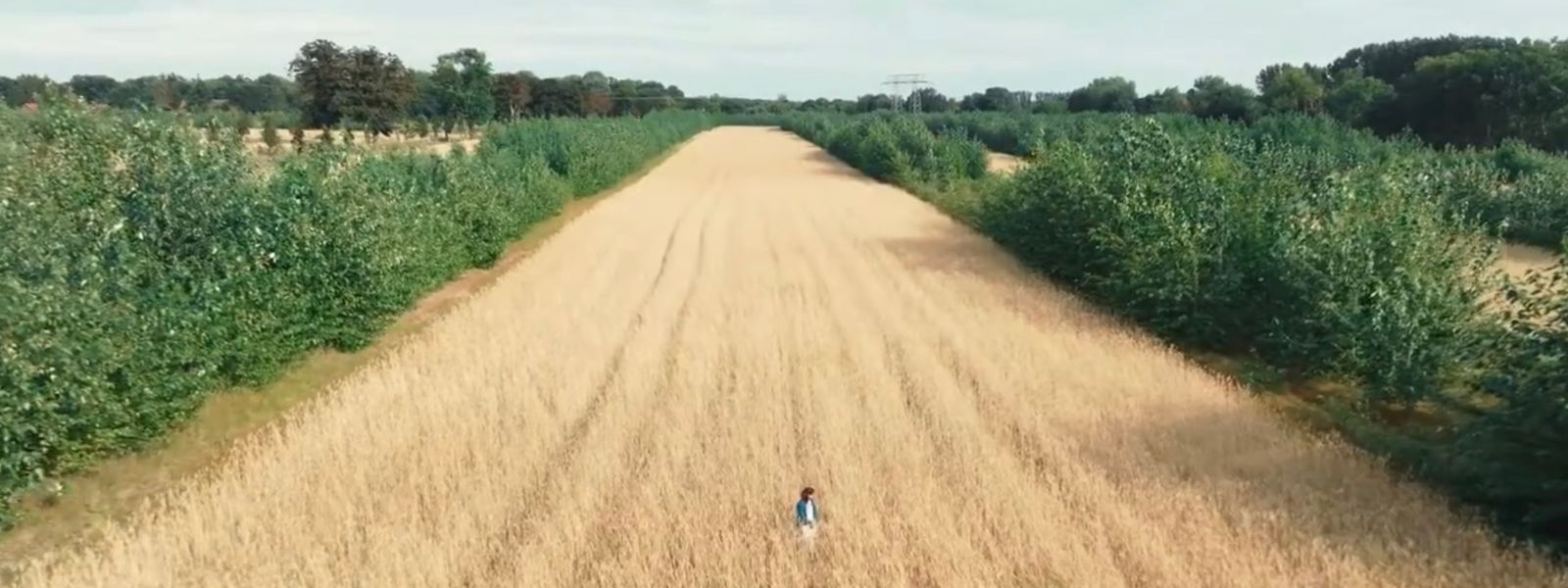
Farther along the road, a second orchard comes into view - long green walls of poplar trees standing in even rows. Mariá explains that these are pioneer species. Fast-growing and easy to maintain, they allow her to integrate trees into larger fields where tractors are still needed. “With poplars, we can keep the benefits of trees and still use our machines,” she says. “We grow crops like rye between the rows, and after harvest, our cows graze the stubble and add natural fertiliser.” Once the cows move on, chickens follow to eat insects and spread nutrients. “It’s a win-win-win situation,” she laughs. “The animals live well, and the soil keeps improving.”


The change in the landscape hasn’t gone unnoticed. “People from the area tell me there are more birds now, more beauty,” Mariá says. “And that matters - people feel when nature is healing.”
Back at the heart of Wilmars Gärten, the market garden hums with quiet activity. Eight people tend a compact 6,400 square metres of vegetables, planned with precision to make the most of every square metre. Carrots are followed by onions, onions by lettuce, lettuce by beans - a tight seasonal rhythm that keeps the soil active year-round. “Everything here is done by hand and by foot,” Mariá explains. “Good planning is everything.”


Right now, it’s tomato season. The plants glow red and orange under the sun, and Mariá’s young daughter runs over with a handful of ripe fruit. Their flavour is astonishingly rich - the taste of sunlight and soil combined. “Farmers who practice regenerative agriculture take big risks for everyone’s benefit,” Mariá says. “But they don’t get paid for it. Still, it’s worth it - this is the kind of farming that gives back.”

By late afternoon, the tomato sauce is ready, and the farm has quieted. Mariá brushes her hands together, the faint scent of tomatoes and smoke lingering in the air, and looks out over the fields where her children play between the rows of vegetables. “When I started, I didn’t know much,” she says with a small smile. “But the land teaches you - if you listen.”
Sahil thanks her for the tour. They stand for a moment, watching the light shift across the orchard. Around them, the farm carries on - bees working the last blossoms, a dog barking in the distance, the steady rhythm of a place that grows both food and understanding.


LET US MAKE IT HAPPEN!