

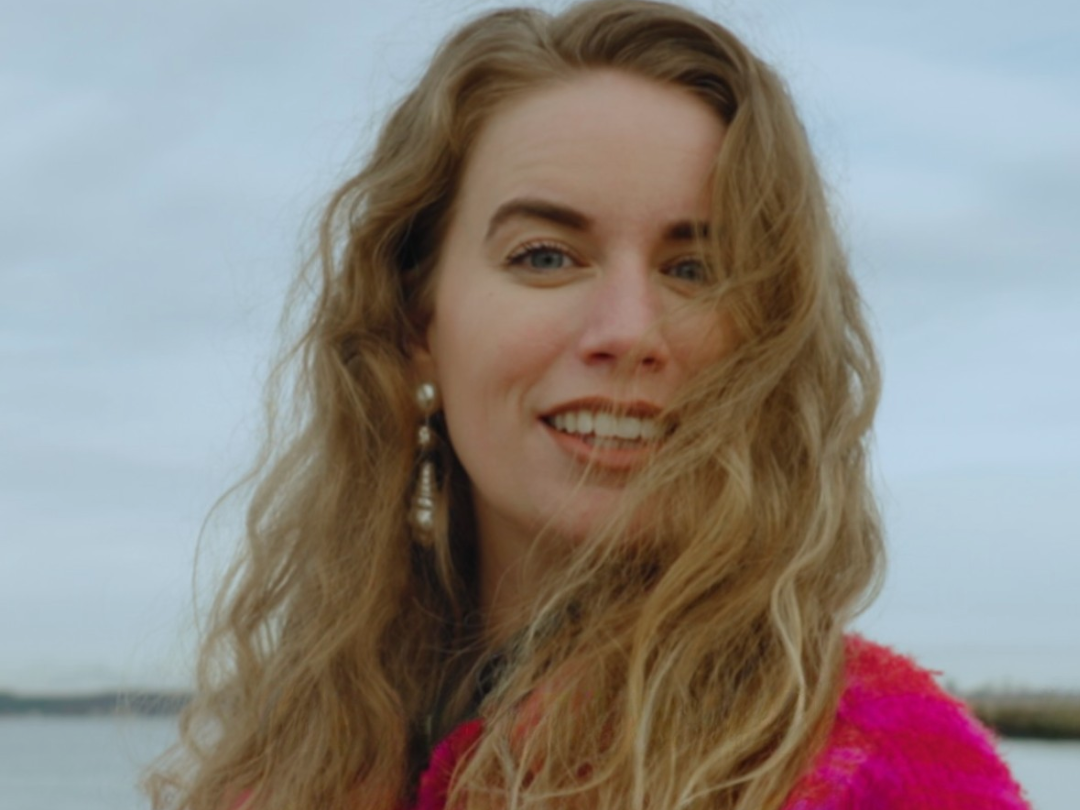



Gittemarie Johansen: From Zero Waste to Systemic Change - Rethinking Sustainability from the Ground Up
Mar 29, 2026
Few environmental voices balance urgency, clarity, and optimism quite like Gittemarie Johansen. The Danish activist, author, and communicator has spent nearly a decade translating complex environmental issues into something people can actually act on. She first entered the sustainability movement through zero-waste living - challenging single use culture and encouraging people to rethink everyday habits. But as her work evolved, so did her understanding of the systems behind those habits, expanding her focus from individual choices to the political and economic structures shaping our food systems, climate policies, and the health of our soils.
In this conversation with Conscious Planet, Gittemarie reflects on that journey - and on why soil, the invisible foundation beneath our food and ecosystems, still struggles to capture political attention. With her characteristic energy and conviction, she argues that real environmental progress requires both personal action and systemic change - and that protecting the ground beneath our feet may be one of the most important climate conversations we’re still not having. 🌍🌱


Your environmental work has evolved over many years, can you tell us about how sustainability became more than a personal interest and turned into a deeper commitment?
When I first started my work with environmentalism, it was from a zero waste perspective. I came into this movement after learning about plastic waste and its detrimental impacts on the planet – and probably most importantly about the lack of infrastructure to properly reuse those resources. Back in 2016, my main solution to these problems was consumer-focused. How can we as individuals change our habits and avoid as much waste as possible? That meant switching away from single-use products, learning how to get produce and groceries with as little plastic as possible and finding ways of substituting products that would otherwise come in plastic, like toothpaste, shampoo, etc. Individual action, of course, still matters a great deal to me, but over time I also came to understand that many of these issues are bigger than the individual; and as such, it is massively important to push for a better and more sustainable legal and legislative framework that automatically holds the corporate polluters accountable. Phasing out fossil fuels and not giving a helping hand to corporations that thrive on overconsumption.
You’ve engaged in policy spaces and public conversations on sustainability. From your perspective, why does soil so often get overlooked in these discussions? Do you think soil’s invisibility makes it harder to prioritise politically, in contrast to plastics, emissions and pollution?
When we talk about plastics, smokestacks, or cars, we have these very visible villains. You can film a turtle with a straw up its nose, you can see smog over a city, and you can hold a piece of trash in your hand. That makes it easy to understand and act on, both emotionally and politically. Soil health is not only more abstract to the individual, but its pollution is also deeply tied to agriculture and the livestock industry. Global lobby organisations have spent millions on painting an imprecise image of the state of our soils. From a policy perspective, that invisibility matters a lot. Soil degradation is slow, it’s complex, and it’s deeply rooted in land ownership and food systems; which are politically sensitive areas. You can’t just say “we’ll ban soil loss by 2030.” It requires systemic change: how we farm, what we eat, how we subsidise food, and how we value ecosystems. This is a lot harder to regulate. In reality, if we don’t talk about soil, we’re not talking about the foundation of our entire sustainability agenda. Literally.
You’ve often spoken about the limits of individual action alone. How did you discover systems change as the real drive for environmental progress? Was there a turning point when you realised your voice could reach beyond individual lifestyle change?
I think this is something that happened gradually. As I learned more and more about how global supply chains are interconnected, as well as how ecosystems affect each other and who we can trace pollution back to, I started to combine my call to action with a broader overview of climate policies, as well as the science behind the reactions we see in the world. I still thoroughly believe that individual action matters - actually, I doubt we could get anywhere without it; but it’s not the only thing that matters, and we need to demand more political and corporate actions. We also need to share the knowledge of how these things are connected.

From your experience in public advocacy, what actually makes decision-makers take environmental issues seriously? What would make them pay attention to soil health?
What makes decision-makers act is rarely just the strength of the science; it’s when an issue becomes politically, economically, and socially unavoidable. Politicians think in terms of food security, economic stability, public health, climate targets, water management, and voter pressure. Soil health touches all of these, but we often frame it as a niche environmental concern. The moment you show that degraded soils mean crop failures, flood risk, drought costs, infrastructure damage, and higher public spending, it moves from being “about nature” to being “about us”. Plastics became politically urgent when citizens, cities, businesses, and NGOs all pushed at the same time. For soil, the most powerful coalition is farmers, climate scientists, water authorities, health professionals, and the food sector speaking with a shared voice.
So what would make people pay attention specifically to soil?
Reframing soil as infrastructure, not environment: Healthy soil is water storage, climate mitigation, disaster prevention, and food security in one system.
Putting real numbers on the cost of doing nothing: Yield loss, fertiliser dependence, flood damage, drought relief, drinking-water treatment
Making it electorally relevant: Food prices, extreme weather, and farmer livelihoods are voter issues. When soil is clearly tied to those, it stops being invisible.
Showing immediate wins, not just 20-year benefits: Politicians operate in short cycles. Demonstrate practices that improve farm profitability, water retention, and climate outcomes within a few years.
Many people care about the planet, but feel that environmental messaging can feel abstract or overwhelming. How have you managed to translate big issues into something people can relate to in their daily lives? How could we introduce soil into the conversation?
The abstract messaging is something I am also deeply concerned with. “Sustainability” has become this umbrella term and in that process it has lost a lot of its meaning, to the point where it is downright unhelpful. I think it’s time to stop the conversation about “saving the planet” and start talking about saving ourselves. Because the planet will be fine, but it is the quality of human lives that is mostly at stake. If we start talking about that, it suddenly feels closer to home. We need to start talking about food habits, groceries, the cost of food, and meeting nutritional needs instead. We can make the conversations and the solutions a lot more down-to-earth by asking: “What does this have to do with my food?” “What does this have to do with my health?” or “What does this have to do with my money and my everyday routines?” We could also ask: “Do you like coffee, chocolate, and affordable vegetables? Great, then you’re already invested in soil.”
You’ve written several books exploring food and zero-waste living. Can you tell us the story about how those evolved? Which parts were most fun to write?
My first book, Sustainable Badass, was this guide to zero waste, but from a realistic and non-perfectionist perspective. In many ways, it’s the sum of many years of videos and blogposts and tutorials all boiled down into a book. My second, which is so far only available in Danish, is a fine dining plant-based cookbook, and this was just such a joy to make through and through. I learned a lot about myself and my cooking in the process, and I can see how much I have evolved my skills since the beginning of this journey. While I am still looking for a UK or US-based publisher for the translations, a lot of other recipes are already easily available on my website, btw. I got to experience seasonal produce and get a better understanding of the potential of vegetables, so creating these recipes has definitely been one of my proudest moments.
As a self-certified foodie, what’s your favourite dish that you never get bored of, and how did it evolve?
I make a vegan carbonara almost every week, and I will never grow tired of it. I have also experience with lentil based kebab, and that is also one of my to-go recipes. If I am cooking a nicer dinner, I almost always make a warm pea sauce with smoked salt, and it never fails to amaze my guests, just an absolute banger.
You often bring joy and creativity into conversations about environmentalism - why is that important to you? When the climate change crisis feels overwhelming, what brings you back to a sense of hope?
Action is the best way to prevent hopelessness. Doing something, anything really, that being making something from scratch, protesting, getting involved politically, signing petitions, making changes in our diets, buying less, repairing something or planting a garden, are all acts that fuel more encouragement and motivation. But I also think it’s necessary to allow ourselves to feel angry, or tired or burned out – if that is what we’re feeling. I take those days to just be angry, but I also know that I won’t feel like that forever. I also think having more than one thing we care about is essential to avoid burnout. Hyperfocusing on any single thing tends to burn us out after a while, so I prioritise many interests and hobbies to always have something to learn and be inspired by.
Our actions matter, but it’s not the only thing that matters, so while we do our thing, and we do our best, we also must push and demand that the political and corporate sectors step it up. Instead of turning that energy inwards.


LET US MAKE IT HAPPEN!